
From IIT to Vrindavan’s Soil — Shaping India’s Future Through Values, Vision and a World-Class Gurukula
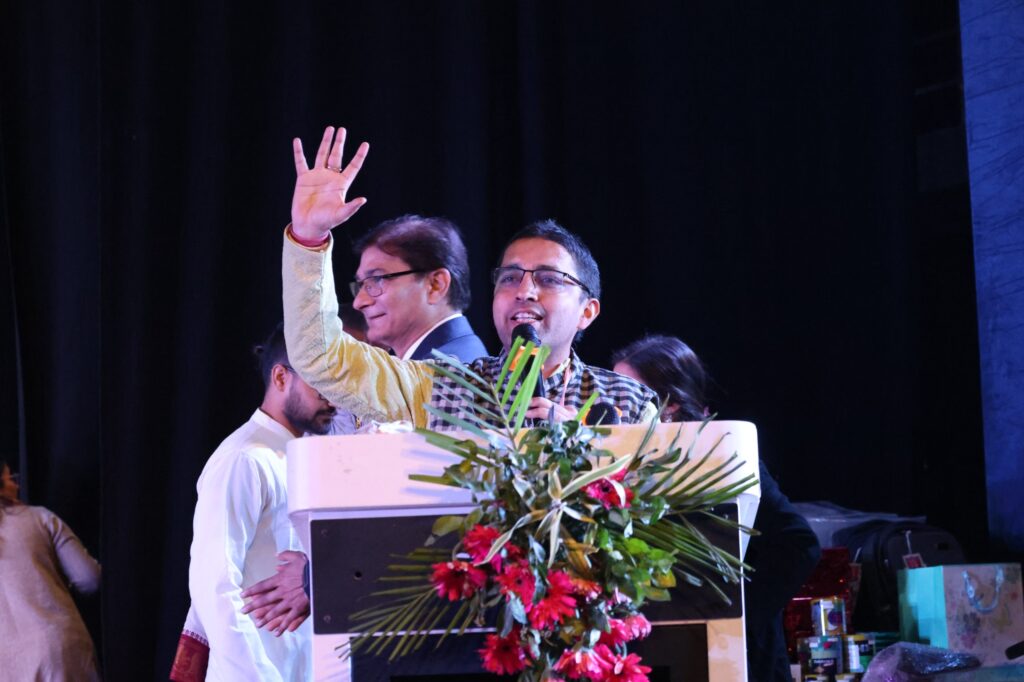
Radhakant Das, DEAN, Bhaktivedanta Gurukula and International School, Vrindavan
India’s educational landscape is witnessing a shift that is quiet yet revolutionary. As cities race toward globalized systems and Western benchmarks, a counter-movement is rising from Bharat’s heartland — one that places values before velocity, identity before imitation, and character before career. This shift signals a new era where local goes vocal: where India’s roots, culture and indigenous knowledge become the driving force of holistic education.
And at the center of this transformation stands a name that is emerging as a powerful identity in modern Indian education: Radhakant Das.
He is not just an IITian or an academician. He represents a new archetype — the rooted nation-builder, who chooses service over salary, culture over convenience, and purpose over personal ambition.
A New Identity for Indian Leadership
An Aerospace Engineering Silver Medallist from IIT Kanpur, with a B.Tech and M.Tech, Radhakant Das (earlier Rohit Daspuriya) walked a predictable path initially — a high-potential role at National Instruments, exposure to global technology, and a future paved with corporate success.
But in 2009, he made a choice that redefined not only his own identity but the educational identity of a community: He left his thriving career to serve full-time at Bhaktivedanta Gurukula and International School (BGIS), Vrindavan.
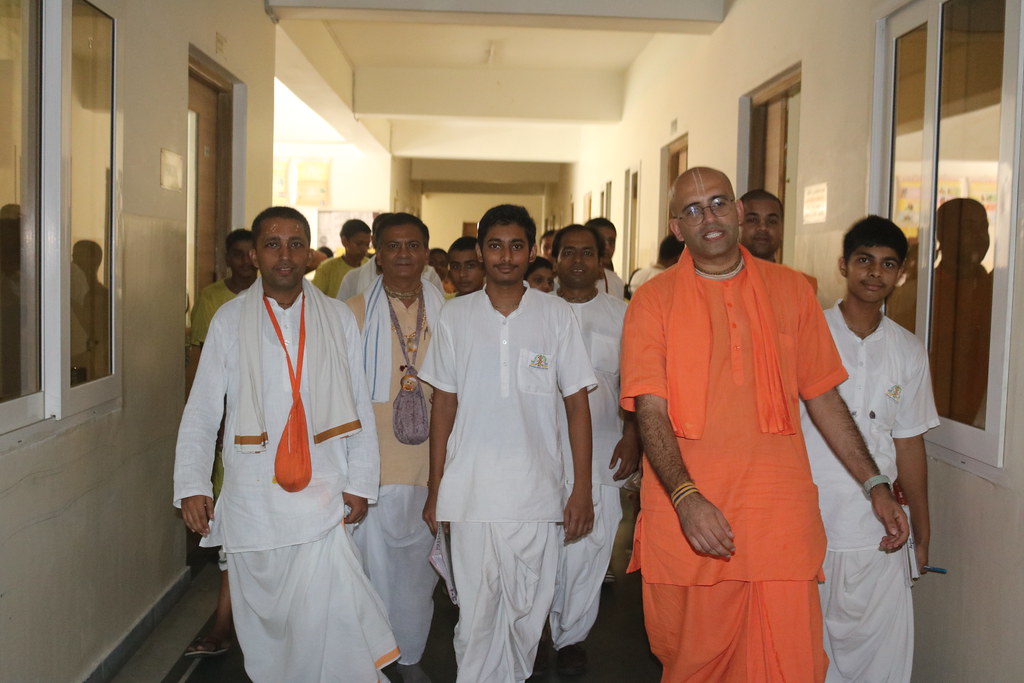
Today, he serves as the Dean of BGIS, where he has been instrumental in shaping its expansion into a 100-acre world-class Gurukula campus. His leadership integrates:
STEM education and robotics
Sanskrit and Indian Knowledge Systems
Bhagavad Gita wisdom
Emotional intelligence and character training
ICSE academic rigor
He is among the rare leaders who unify IIT-level precision with deep Indic consciousness.
Beyond BGIS, he is pursuing a PhD in Indian Knowledge Systems at IIT Mandi and contributes to the development of Bhaktivedanta University, ISKCON’s first global university — a hallmark project for value-based higher education in India.
Guided by HG Lila Purushottam Prabhu and blessed by HH Gopal Krishna Maharaj, he embodies a leadership style rooted in humility, devotion and long-term societal impact.
Through his journey, “Radhakant Das” has become more than a name — he is an identity representing the future of Bharatiya education.
When Local Goes Vocal — Vrindavan Becomes a Model for the Nation
The rise of BGIS in Vrindavan is not an isolated milestone. It marks a larger educational renaissance that champions local wisdom as global strength.
Why Vrindavan Matters
Establishing a world-class institution in Vrindavan — not in Delhi, not in Bengaluru — is a strategic and symbolic act.
It proves that:
- Excellence does not require metropolitan infrastructure
- Innovation can flourish in rural India
- Spiritual environments enhance emotional resilience and clarity
- Local culture can elevate global competence
This is local goes vocal — not by exporting products, but by exporting principles, values, and a uniquely Indian model of holistic education.
The BGIS Model: A Fusion of Tradition and Technology
The Gurukula model here is not a relic of the past. It is a living, evolving ecosystem, combining:
- Digital learning tools
- Modern science labs
- Meditation and mindfulness
- Gita-based leadership training
- Sustainability and seva
- Arts, music, culture and physical fitness
In a world overwhelmed by noise and pressure, BGIS offers students something rare — clarity, culture, and character.
A Civilizational Blueprint for Education
The upcoming Bhaktivedanta University carries this philosophy forward. It will integrate:
Indian Knowledge Systems
Consciousness studies
Vedic sciences
Sustainability
Modern disciplines, taught through Indic frameworks
This is not India imitating global models —
this is India contributing to global thought.
A Story Bigger Than a Man, Yet Defined by His Choices
The “local goes vocal” movement in Vrindavan is not just about one institution or one leader. It is a national reawakening — a return to educational systems that build strong minds and strong characters.
Yet, the choices of Radhakant Das make this movement visible, credible and scalable. His journey demonstrates that:
Serving India is not a compromise; it is a calling
Village-based institutions can shape global citizens
Modern success and ancient wisdom can walk together
The future of Bharat will rise from its roots
Through his work, he has become an identity — a symbol of what is possible when India celebrates its own soil, culture and consciousness.
And in that sense, Vrindavan is not just a location.
It is the future of Indian education.